Warranty or Build: How to Mod Your Car Without Handing the Dealer a Reason to Walk Away

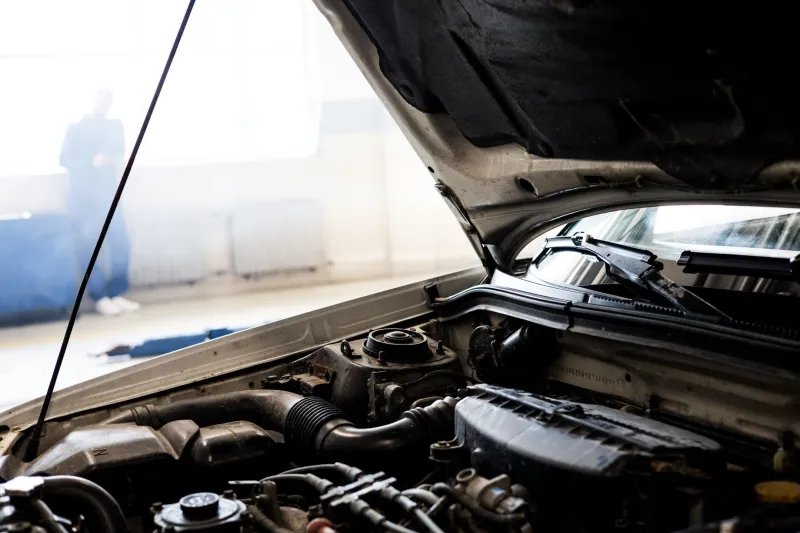
There's a moment every new-car builder dreads. You've got fresh wheels, a tune, maybe a cold air intake sitting in the garage waiting to go on — and then something breaks. You roll into the dealership hoping the warranty covers it, and the service advisor starts squinting at your engine bay like a detective at a crime scene. What happens next depends a lot less on what's in your owner's manual and a lot more on what that advisor decides to care about.
The truth about warranties and modifications is messier than the internet would have you believe. It's not black and white. It's not "any mod voids everything." And it's definitely not "dealers can't touch your claim just because you changed the air filter." The reality lives somewhere in the gray, and if you're going to build on a car that still has factory coverage, you need to understand exactly where that line sits.
The Magnuson-Moss Warranty Act Is Your Best Friend (If You Know How to Use It)
Most people in the enthusiast community have heard of the Magnuson-Moss Warranty Act. Fewer actually understand what it does. Passed back in 1975, this federal law prevents manufacturers from voiding your warranty simply because you installed aftermarket parts — unless they can prove that the aftermarket part caused the specific failure you're claiming.
That's the key phrase: caused the failure. A dealer can't deny your transmission warranty claim just because you put on aftermarket coilovers. The two aren't related. But if you've got a tuned ECU and your engine throws a rod, you're going to have a much harder conversation. The burden technically falls on the manufacturer to prove causation, but in practice, most people don't push back hard enough to make that stick.
Knowing this law exists gives you leverage. Using it means keeping documentation, understanding your build, and being ready to have a real conversation instead of just rolling over when the service desk shakes their head.
The Mods That Will Actually Get You Denied
Let's be direct about the stuff that genuinely puts warranty claims at risk.
Engine tunes and ECU flashes are the biggest landmine. Manufacturers have gotten very good at detecting these. Many modern vehicles log tune activity in the ECU, and some can even detect when a flash has been applied and reversed. Ford, GM, and Subaru dealers in particular have service techs who know exactly what to look for. If your powertrain shows signs of modified fueling, timing, or boost targets, expect a fight on any engine or transmission claim.
Forced induction add-ons — turbo kits, supercharger systems, nitrous — on vehicles not designed for them are essentially a red flag waving at every service visit. The mechanical stress these systems add is obvious to anyone who knows the platform, and dealers aren't going to pretend otherwise.
Suspension modifications that affect geometry can create liability issues on safety-related components. If you've got a modified subframe or non-OEM control arms and something in the steering or suspension fails, expect scrutiny.
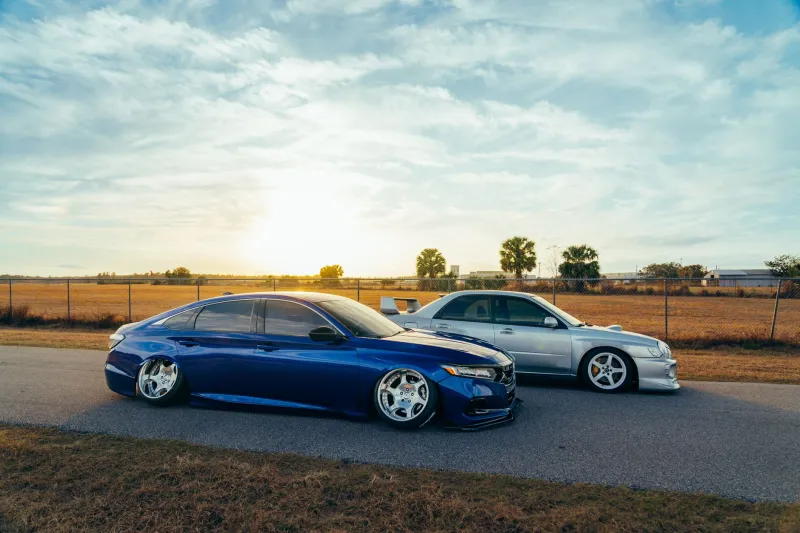
Oversized wheels and tires that cause ABS sensor errors, drivetrain binding, or differential stress are another area where dealers have a legitimate argument. If the logs show ABS faults and your tires are two sizes up from spec, connecting those dots isn't hard.
What Dealers Genuinely Don't Care About
Here's where it gets interesting. Talk to anyone who works in a dealership service department long enough and they'll tell you the same thing: most of the time, they're just trying to get through the day. Unless a modification is obviously connected to the failure, most service advisors aren't going to go digging.
Cold air intakes on naturally aspirated engines? Almost never an issue unless the filter is positioned somewhere it could ingest water or debris. Cosmetic mods — wheels, body kits, wraps, interior work — are basically invisible to warranty claims unless they've physically damaged something. Exhaust systems on their own rarely cause problems unless you're on a diesel with emissions-related coverage.
One service writer at a high-volume Toyota store put it plainly: "If a guy comes in with aftermarket wheels and his power window motor dies, I don't care about the wheels. I'm not going to waste everyone's time trying to connect those two things."
The practical reality is that dealers make money on warranty work. They get reimbursed by the manufacturer for legitimate claims. Denying your claim doesn't benefit them financially — it just creates a headache. They're looking for obvious cause-and-effect, not an excuse to play gotcha.
The Loopholes Smart Builders Actually Use
Experienced builders have developed a few legitimate strategies for navigating this landscape without giving up their coverage.
Keeping the stock parts is the oldest move in the book. If you've got a tune or an intake on a car still under powertrain warranty, having the stock ECU or airbox ready to swap back is cheap insurance. It's not foolproof — some manufacturers log everything — but it still works more often than people think.
Building a paper trail matters more than most people realize. Receipts, installation records, and documentation showing that modifications were done correctly and with quality components help establish that you're a responsible owner, not someone who threw random parts at a car and hoped for the best.
Knowing your platform is critical. Some manufacturers are notoriously aggressive about warranty claims on modified vehicles — Subaru's turbo cars have a long history of this, and certain Dodge and Ram dealers have developed reputations for being difficult. Others are more relaxed. Doing research in owner communities before you build tells you what to expect before you're sitting in a service waiting room.
Purchasing a third-party extended warranty after your factory coverage expires is a separate conversation, but worth mentioning — many of these aftermarket warranties explicitly exclude modified vehicles, so read the fine print before you assume you're covered.
When You Get Denied, Know Your Next Move
If a dealer denies a warranty claim and you believe the denial is unjustified, you have options. Start by asking for the denial in writing with a specific explanation of what modification they believe caused the failure. Many dealers back off when they realize you know your rights.
If that doesn't work, escalate to the manufacturer's customer service line. Document everything. If you're still getting stonewalled, the Better Business Bureau and your state attorney general's consumer protection office are both legitimate escalation paths. There are also attorneys who specialize in Magnuson-Moss cases, and manufacturers know it.
The enthusiast community has won these fights before. You just have to be willing to push.
Build Smart, Not Blind
The goal isn't to scare you out of modifying a car that still has factory coverage. The goal is to make sure you're doing it with your eyes open. Know which mods carry real risk, know which ones are basically invisible to the service department, and know what your rights are when someone tries to use your build against you.
The best builders aren't the ones who never touch a car under warranty. They're the ones who understand the system well enough to work inside it — and know exactly when to push back.