Vinyl or Paint: The Decision That Tells Everyone at the Show Exactly Who You Are
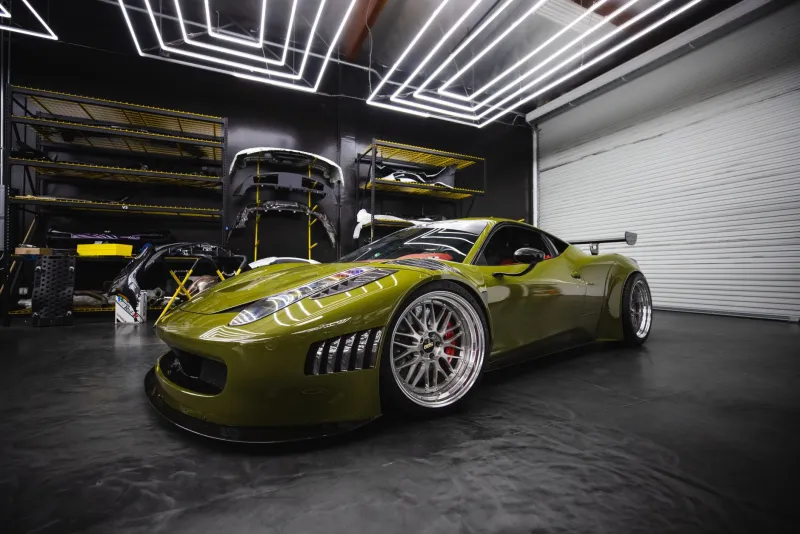
Walk any decent car show in the US right now and you'll see both camps represented hard. One side is rolling up with color-shifting wraps that catch the sun like a fever dream. The other side has single-stage paint buffed so deep you could lose your reflection in it. And both sides will tell you, with complete confidence, that the other guys made the wrong call.
Here's the thing though—they might both be right.
The wrap versus paint debate has been rehashed in every forum, every Discord server, and every parking lot conversation since vinyl got good enough to fool a casual eye. But most of those conversations skip the stuff that actually matters: durability under real conditions, what it costs per year you own the car, and what your choice says about where your build is headed. Let's get into it.
What You're Actually Paying For (And When)
The sticker shock on a quality paint job is real. A professional respray on a mid-size car—done right, with proper prep, color-matched panels, and a clear coat that'll hold up—can run you anywhere from $3,500 on the low end to well north of $10,000 if you're talking a show-quality multi-stage finish. And that's before you factor in bodywork.
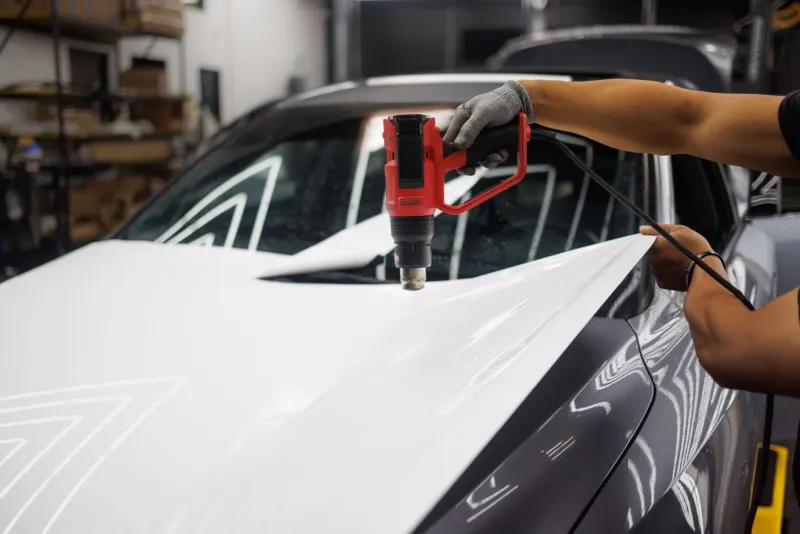
A full vehicle wrap from a reputable shop? You're looking at roughly $2,500 to $5,000 depending on the car's size, the complexity of the design, and the quality of the vinyl itself. Brands like 3M, Avery Dennison, and KPMF sit at the top of the food chain for a reason—their films hold color, resist UV fading, and conform to curves without looking like someone gift-wrapped your quarter panel.
But here's where builders get tripped up: they compare the upfront numbers and stop there. The smarter move is thinking in terms of cost over time. A high-quality wrap has a realistic lifespan of five to seven years with proper care—longer in covered parking, shorter if your car lives outside in a southern state where the sun is basically a personal enemy. Paint, done correctly, can last the life of the car. Do that math on your specific situation before you swipe the card.
Reversibility: The Builder's Secret Weapon
If there's one argument that wraps win outright, it's this one. Vinyl comes off. Paint doesn't.
That matters more than people admit. Builders who are still evolving their vision—who might want to swap a colorway, who plan to sell eventually, or who are building something that competes in different classes—have real flexibility with a wrap. You can strip it, refresh it, or go in a completely different direction without touching the factory paint underneath. That preserved original paint is actual money in your pocket if you ever sell.
Marcus T., a builder out of Atlanta who runs a widebody Mustang GT on the regional show circuit, wrapped his car twice before committing to paint. "I used the wraps to test colorways," he said. "The first one I hated after six months. The second one I loved but wanted something more permanent. By the time I went to paint, I knew exactly what I wanted. The wraps weren't wasted money—they were research."
That's a legitimate strategy. Treat the wrap as a design iteration phase, not a final answer.
When Only Paint Will Do
There's a ceiling to what vinyl can communicate at a serious show. Judges, enthusiasts who know their stuff, and anyone who's spent real time around high-end builds can spot a wrap at close range. The texture is different. The way light breaks across a panel edge is different. A deep, hand-polished paint job has a presence that current vinyl technology hasn't fully replicated.
For builds chasing serious hardware—concours judging, top-tier invitational shows, or anything where the finish itself is part of the score—paint isn't optional. It's the baseline expectation.
Derek R., who builds out of a shop in Phoenix, put it plainly: "I've seen wraps win at local shows all day. But when you're standing next to a car with a proper three-stage paint job under show lighting, the wrap looks like what it is. That's not a knock—it's just the reality of the game at that level."
There's also the custom paint angle. A skilled painter can do things vinyl simply can't match: candy finishes with real depth, hand-laid graphics that flow with the body lines, flake that sits inside the clear rather than on top of it. If your build's identity is tied to something unique in the finish itself, that's a paint conversation.
Choosing the Right Shop: This Is Where Builders Get Burned
Whether you go wrap or paint, the shop selection is where most builds go sideways. And the warning signs are the same on both sides.
For wraps, avoid any shop that can't show you completed work on a complex vehicle—door handles, bumper edges, mirror caps, all of it. Wrapping a flat hood is easy. Wrapping a full car cleanly, with no lifting edges, no visible seams in the wrong places, and no bubbling around curves, takes real skill. Ask to see installs that have been on cars for at least two years. That's where you see how the work actually held up.
For paint, prep work is everything. Any shop that glosses over surface prep questions or can't tell you their process for blocking, priming, and sealing before color goes on is a shop you walk away from. Paint is only as good as what's underneath it.
In both cases, find shops that are plugged into the car community—not just the commercial fleet world. A shop that wraps delivery vans all day and a shop that wraps show cars are operating with completely different standards. Same goes for body shops. Look for the ones with builds in their portfolio, not just insurance repairs.
Reading the Room at the Show
Here's the honest truth: at the average weekend meet or regional show, a clean, well-installed wrap is going to turn heads just as hard as paint. The crowd responds to color, to execution, to overall presentation. If your wrap is dialed in and your build is tight everywhere else, you're going to get attention.
But if you're serious about where your build is going—if shows are getting bigger, if judges are getting more discerning, if you're building something you want to be known for—the paint conversation is inevitable. It's not about snobbery. It's about what the finish communicates when someone gets close and really looks.
Your paint job, or your wrap, is the first thing people see and the last thing they remember. Make the choice deliberately, with a real understanding of your build's purpose and your timeline. Because at the end of the day, both options can be done brilliantly and both can be done badly—and the difference between those outcomes is always in the details.