Your Engine Is Begging for Help: The Cooling Upgrades Builders Keep Ignoring
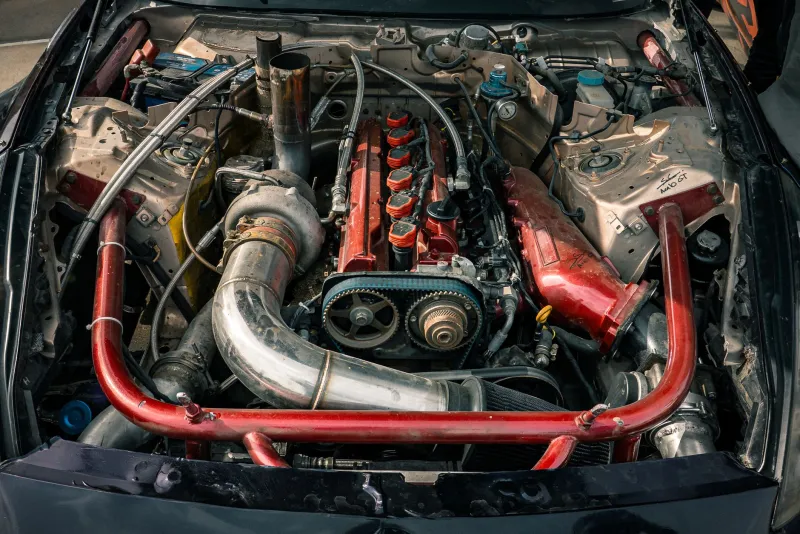
You've got the intake. You've got the tune. Maybe you even swapped the exhaust and picked up a healthy bump in horsepower. The build is looking exactly how you imagined it — right up until you're sitting in traffic on a 95-degree Texas afternoon and the temperature gauge starts climbing like it's got somewhere to be.
This is the moment a lot of builders realize they forgot something important. Not something flashy. Not something that gets likes on Instagram. But something that literally determines whether your engine survives the summer or turns into an expensive paperweight.
We're talking about the cooling system, and the way most people treat it as an afterthought is honestly one of the biggest unforced errors in the build community.
Why More Power Means More Heat (And Why That Math Matters)
Here's the basic physics nobody wants to slow down and think about: when you add power to an engine, you're adding combustion. More combustion means more heat. Your factory cooling system was engineered to handle the factory power output — full stop. The engineers at whatever OEM built your platform weren't sitting around leaving generous thermal headroom for your future bolt-on plans.
So when you bolt on a supercharger, drop in bigger injectors, or push more boost through a turbo setup, you're asking a cooling system designed for a stock engine to manage a significantly hotter one. That gap between what your cooling system can handle and what your engine is now producing? That's where builds go to die.
The frustrating part is that this plays out in slow motion. Your engine might run fine on a cool evening cruise. It might hold temps on the highway where airflow is consistent. But stick it in stop-and-go traffic on a hot day, run it hard at a track event, or tow anything up a grade, and the cracks in your thermal management strategy show up fast.
The Parts Builders Overlook First
Most people who think about cooling upgrades jump straight to radiators, and yeah, we'll get there. But before you drop money on an aluminum three-row unit, take a hard look at the components that are probably already failing you.
Thermostat: A stuck or lazy thermostat is one of the most common and most ignored culprits. If yours is original equipment on a high-mileage build, replace it. A quality performance thermostat that opens at a slightly lower temp can make a noticeable difference, especially on modified engines that generate more heat at idle.
Coolant: Not all coolant is created equal, and the mix matters more than most builders acknowledge. Running straight water with a water wetter additive is popular in track environments because water actually transfers heat more efficiently than a 50/50 mix — but it offers zero freeze protection and can corrode your system over time. For a street build, a quality full-strength coolant diluted to the right ratio for your climate is non-negotiable.
Water Pump: High-volume water pumps push more coolant through the system per revolution. On a modified engine, this can be the difference between temps that creep and temps that hold steady. Electric water pumps take it a step further by decoupling coolant flow from engine RPM, which is particularly useful at low-speed, high-heat situations where your engine needs cooling the most.
Hoses and Clamps: This one sounds boring but hear us out. Old, soft, or marginally-sized hoses restrict flow and can collapse under pressure. If your build has any age on it, fresh silicone hoses aren't just aesthetically cleaner — they're functionally better.
Radiator Upgrades: When You Actually Need One
Okay, now we can talk radiators. If you've addressed the components above and you're still fighting temps, or if your power level is significantly above stock, a radiator upgrade makes real sense.
The general hierarchy looks like this: a direct-fit aluminum radiator with a higher row count than your OEM unit is your entry point. These typically run $150–$400 depending on the platform and are a straightforward swap that most home builders can handle in an afternoon. You'll get better thermal capacity without touching anything else in the engine bay.
For more serious builds — think forced induction setups, track cars, or anything making big power numbers — an oversized aluminum radiator paired with a quality electric fan setup is the move. Electric fans pull more consistently than mechanical fans, especially at low speeds, and they let you run a lower-profile setup if hood clearance is an issue.
If you're running a turbo or supercharger, don't forget your intercooler is part of this equation too. Heat-soaked charge air kills power and raises combustion temps, which loops right back into thermal stress on the engine. A front-mount intercooler upgrade or water-methanol injection can help here, but that's a separate rabbit hole worth its own article.
Budget Tiers That Actually Make Sense
Let's be real about money, because not every builder is working with the same resources.
Under $200: New thermostat, fresh coolant flush with quality fluid, and a hose inspection. If anything looks soft or cracked, replace it. This baseline maintenance tier is embarrassingly effective on builds where the basics have been neglected.
$200–$600: Add a high-volume water pump and a quality direct-fit aluminum radiator. This combination handles most street builds with moderate power increases and will dramatically improve your margin before temps become a problem.
$600–$1,500+: Electric fan conversion, oversized radiator, and potentially an upgraded intercooler if you're running forced induction. This is your serious build tier — the one that gives you confidence at track days and in summer heat without babying the throttle.
The Summer Test You Should Run Before It Runs You
Here's a practical tip that'll save you from a bad day: before summer gets serious, do a deliberate stress test on your cooling system. Find a long idle situation — a drive-through line, a parking lot, a slow-moving highway on-ramp — and watch your temps. If you're climbing past your target operating range in conditions like that, your cooling system is already marginal.
Don't wait for your engine to tell you it's struggling by way of a blown head gasket or a cracked block. Those conversations are expensive, and they always happen at the worst possible time.
Cooling Isn't Glamorous, But Neither Is a Tow Truck
Nobody's posting glamour shots of their new radiator. The car community doesn't throw trophies at builders for smart thermal management decisions. But the builders who take this stuff seriously are the ones whose engines are still running strong three summers from now while someone else is doing a teardown they didn't plan for.
Your build deserves to be driven hard, shown off, and pushed to what it's actually capable of. None of that happens if you're watching the temp gauge instead of the road. Get the cooling system dialed in, and everything else gets to actually shine the way you built it to.