Rubber Reality Check: How the Wrong Tires Are Sabotaging Your Entire Build
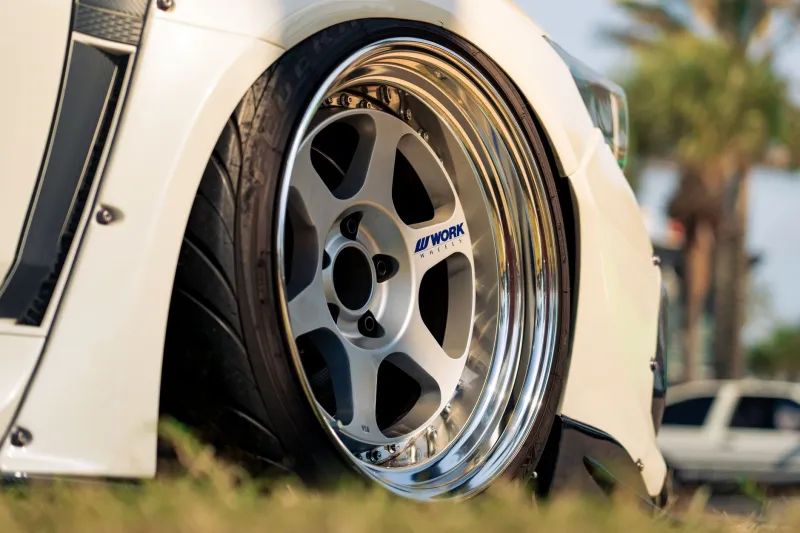
Let's say you've done the work. New wheels — proper ones, not those chrome boat anchors from a mall kiosk. Lowered suspension, maybe a short shifter, window tint that's just barely legal. You pull into the meet and something's off. People glance, maybe nod, but nobody's walking over. Nobody's crouching down for a closer look.
Here's the uncomfortable truth: your tires are snitching on you.
Tires are the handshake between your build and the rest of the world. They're the last thing touching the ground and, oddly enough, the last thing most builders think about. That's a mistake that turns a $3,000 build into a $3,000 punchline.
The Aesthetic Math Nobody Talks About
Wheels and tires are a visual system, not individual parts. When you put a fresh set of 18-inch wheels on a car and leave the stock tire sizing in place, you end up with what the community lovingly calls "rubber band tires" — or worse, you get so much sidewall that the whole setup looks like a lifted Buick.
Here's where it gets technical, but stick with us. Tire sizing isn't just width. It's a three-number equation: section width, aspect ratio, and wheel diameter. That 225/65R16 that came stock on your Accord? Slap a 17-inch wheel on without adjusting the aspect ratio and you've just changed your effective rolling diameter, which throws off your speedometer, your odometer, and — if you're running any kind of tune — potentially your fueling calculations.
The goal is to keep your overall diameter close to stock (within about 2-3%) while adjusting the width and sidewall to match your new wheel fitment. Tools like Tire Size Calculator and Will These Wheels Fit are free, they take about four minutes to use, and they will save you from a very expensive, very embarrassing mistake.
Sidewall Height: The Unsung Hero of How Your Car Looks
This is where builds either come together or fall apart visually. A low-profile tire on a car that isn't slammed looks desperate — like you're trying too hard and the car knows it. A tall sidewall on a properly lowered setup looks like a rental car that someone accidentally put nice wheels on.
The sweet spot depends on your platform and your intent. Track-focused builds can get away with aggressive low-profile fitments because the stiff sidewall actually helps with turn-in response and reduces flex under load. Street builds, especially daily drivers in states where roads look like the surface of the moon (we see you, Chicago), need enough sidewall to absorb real-world abuse without destroying your wheels every time you clip a pothole.
A 40 or 45 series aspect ratio tends to be the visual and functional compromise that works on most lowered street builds in the 17-to-19-inch wheel range. Below 35 and you're making a statement — just make sure your suspension and alignment are dialed in enough to back it up.
Compound Choices and Why "Any Tire" Is Never the Answer
Not all tires are created equal, and the performance gap between a budget all-season and a proper summer performance tire is genuinely shocking the first time you drive back-to-back.
For enthusiast builds, the compound conversation breaks down into three real-world categories:
All-Season Performance (A/S): The practical choice for builders who daily their car in variable weather. Tires like the Michelin Pilot Sport All Season 4 or the Continental ExtremeContact DWS06+ are legitimately good. They're not going to embarrass you at an autocross, and they won't kill you in light snow. Compromise is the name of the game here, but it's an informed compromise.
Summer Performance: This is where builds wake up. A proper summer tire — Michelin Pilot Sport 4S, Bridgestone Potenza Sport, Falken Azenis FK510 — transforms the way a modified car communicates with the driver. Steering feels sharper, throttle response translates to actual forward motion instead of wheelspin, and hard cornering becomes something you look forward to instead of something you survive. The catch? Below 45°F, these tires get greasy fast. Below freezing, they're basically plastic.
Track/Autocross Compounds: If you're running events, look at the Toyo Proxes R888R or the BFGoodrich g-Force Rival S. These are street-legal, but they're not pretending to be a daily tire. They're sticky, they wear fast on pavement, and they'll completely change your understanding of what your car is capable of. Save these for event days.
Fitment Aggression: How Far Is Too Far?
The stretched tire look — running a significantly narrower tire on a wide wheel — has a dedicated following in the stanced community. We're not here to tell you that's wrong. But we are here to tell you what it costs.
A stretched fitment reduces the contact patch, which means less grip. It also puts lateral stress on the sidewall that it wasn't designed to handle, which can lead to sudden deflation in hard cornering situations. If you're running a static stance build that lives on trailers and parking lots, stretch away. If you're driving this thing home on the highway, understand the tradeoff you're accepting.
On the flip side, running a tire that's too wide for your wheel (over-stretching in the other direction) creates handling instability and can cause the bead to unseat under hard cornering. Neither extreme is free.
The Double-Take Moment Is Real
Here's the thing about getting tires right: it doesn't announce itself loudly. Nobody's going to walk over and say "man, those are perfect aspect ratios." What happens instead is your car just looks correct. The proportions click. The stance looks intentional. The wheels fill the arches the way they were always supposed to.
Builds that get tires wrong have this uncomfortable gap between the effort invested and the result delivered. You can feel it when you look at them. Something's slightly off and you can't quite name it, but the tire situation is almost always the culprit.
Builds that get tires right look finished. They look like someone who actually knows what they're doing built them — because they do.
The Budget Reality
Quality performance tires aren't cheap. A set of Pilot Sport 4S in a popular fitment like 245/40R18 will run you $250-$350 per tire retail. That stings. But consider what you've already spent on the rest of the build and ask yourself whether it makes sense to compromise the one component that literally connects everything else to the road.
Sites like Tire Rack, Discount Tire, and SimpleTire run regular sales, and buying a set of four almost always unlocks a rebate. Factor in installation and balancing ($15-$25 per tire at most shops) and plan accordingly.
If budget is genuinely tight, brands like Falken, Hankook, and Nitto offer real performance at lower price points. The Falken Azenis FK510 in particular punches well above its price and looks great doing it.
Don't Be the Build That Almost Made It
You've already done the hard part — the wrenching, the research, the money spent on parts that actually matter. Don't let the last four things touching the road be an afterthought. Tires are where your build either earns the double-take or gets filed away in someone's mental "almost" folder.
Get the sizing right. Match the compound to how you actually drive. Respect the sidewall. And for the love of everything, stop leaving factory rubber on a custom build. Your rack deserves better than that.