Why Your Build Hits Different in Person Than It Does on Your Phone
You roll into a Saturday morning meet and people are walking over before you've even cut the engine. The stance is right. The paint catches every bit of available light. Someone's already got their phone out. But then you post the photos that night and the engagement is dead. Flat. The car looks like a stock photo of itself — no soul, no presence, no drama.
Welcome to the camera tax. Every builder pays it eventually, and most of them don't even know why.
The gap between how your build looks in real life and how it photographs isn't about your car being less impressive than you think. It's about physics, optics, and a few bad habits that are quietly murdering your content every single time you pull out your phone.
Your Eyes Are Doing Work the Camera Refuses To
Here's the thing nobody tells you when you're hunched over your phone trying to capture your build: human vision is a miracle of dynamic range. Your eyes constantly adjust to shadows and highlights in real time, pulling detail out of dark wheel wells while simultaneously reading the metallic flake in your paint under direct sun. A phone camera — even a good one — cannot do that. It picks a middle exposure and everything else either blows out or goes black.
This is why your gloss black wheels look like dark blobs in photos even though in person they've got incredible depth. It's why your custom interior looks flat and muddy when the real thing makes people stop and stare. The camera isn't broken. It's just not your eyes.
Understanding this one thing changes how you approach shooting your build entirely. You stop trying to find the perfect single shot and start thinking about how to control the scene so the camera doesn't have to work as hard.
Lighting Is the Whole Game
If you're shooting your car in direct midday sun, you're going to lose every time. Harsh overhead light creates unflattering shadows in all the wrong places — under the rockers, inside the wheel arches, across body lines that should be popping. It flattens everything.
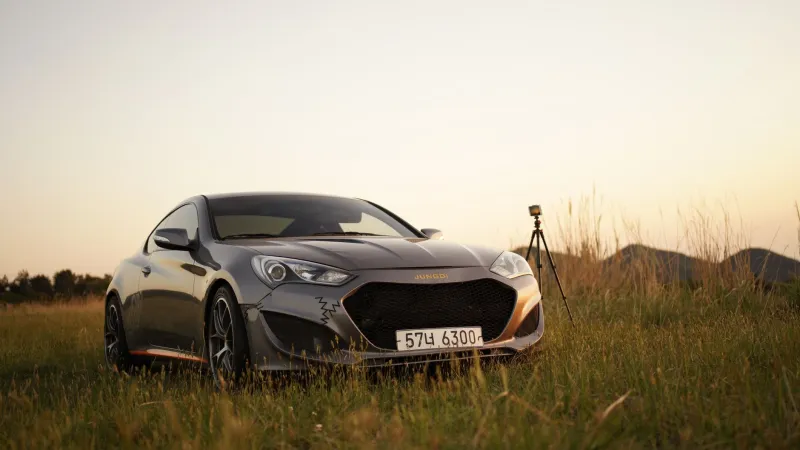
The golden hours — roughly the first hour after sunrise and the last hour before sunset — aren't just a photography cliché. That low-angle, warm light rakes across your bodywork and pulls out every curve, every crease, every intentional line your build has. It's the same reason show cars always look better at dusk than they do at high noon.
Overcast days are genuinely underrated for car photography. That soft, diffused cloud cover acts like a giant softbox, killing harsh shadows and giving you even light across the whole car. Your paint will look richer, your details will read cleaner, and you won't be fighting blown-out highlights on your hood.
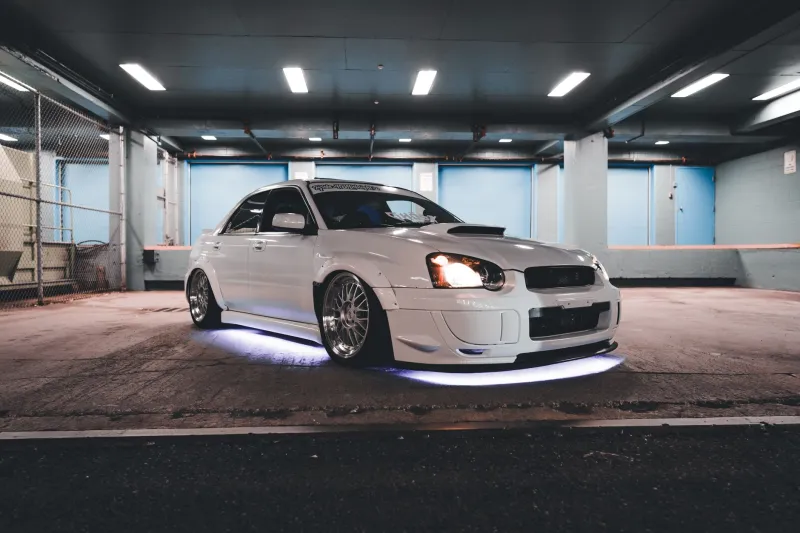
If you're shooting indoors or in a parking structure, find a spot near the entrance where natural light spills in from the side. That single directional light source will add more dimension to your car than any filter ever could.
Angles That Lie vs. Angles That Sell
The average person photographs their car from standing height, straight on, from about twenty feet away. The result looks like a DMV photo. Technically accurate. Completely soulless.
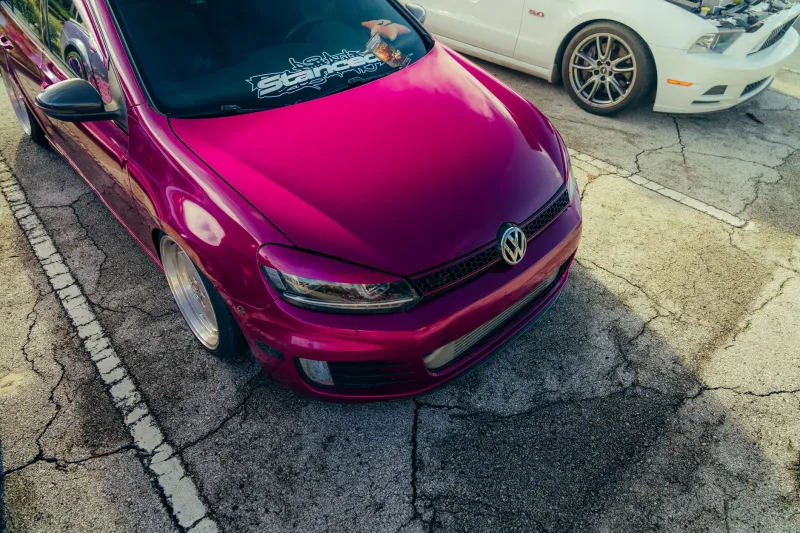
Get low. Seriously — get your phone or camera down near ground level and shoot upward slightly. This angle makes almost every car look more aggressive, more planted, more purposeful. It exaggerates the stance, makes the wheels look meatier, and gives the whole build a sense of scale it doesn't have when you're shooting it eye-level from across a parking lot.
Three-quarter angles — front or rear — almost always beat straight-on shots. They show depth, they show the relationship between the front and side of the car, and they let the viewer's eye travel across the whole build instead of just hitting a flat wall of metal.
Close-up detail shots are your secret weapon. The stitching on your steering wheel. The machined face of your wheels. Your intercooler peeking through the bumper. These shots build narrative. They tell people this build was thought through, not just thrown together. String a few of them together and you've got content that actually makes people stop scrolling.
The Editing Trap Most Builders Fall Into
There's a certain kind of car photo edit that's become its own cliché — cranked contrast, crushed blacks, oversaturated paint, and a color grade that makes everything look like it was shot through a dirty Instagram filter circa 2014. It might look intentional on your phone screen at 2 a.m., but it reads as amateur everywhere else.
Light editing does more for a car photo than heavy editing almost every time. Straighten the horizon. Bump the exposure slightly if the shot is dark. Bring the highlights down a touch if the sky is blown out. Add a tiny bit of clarity to pull out texture in the paint. That's usually it.
If you're shooting on a phone, shoot in ProRAW or the highest quality format your device supports. It gives you way more room to work with in post without the image falling apart. Free apps like Lightroom Mobile let you do legitimate adjustments without the learning curve of desktop software.
One thing that actually does help: desaturating the background slightly while keeping the car's color intact. It's a subtle move that draws the eye exactly where you want it without looking like a bad Photoshop job.
Real-World Presentation Still Matters
None of this photographic technique means anything if the car itself isn't ready to be shot. A full detail before a shoot isn't optional — it's the foundation. Water spots, brake dust on the wheels, fingerprints on the glass: all of it shows up in photos in ways your eye glosses over in person.
Background matters more than most builders give it credit for. A clean wall, an empty industrial lot, a stretch of empty road — these settings let your build be the subject. A cluttered parking lot with shopping carts and minivans in the background isn't doing you any favors, no matter how good your shooting angles are.
Think about what story you want the photo to tell before you take it. Is this a stance shot? Get low and wide. Is this about the engine bay? Find even light and get in close. Is this a lifestyle shot of the car in its element? Get it moving, even if it's just rolling slowly past the camera. Intentional shots beat accidental ones every single time.
The Build Is Already There — Give It the Shot It Deserves
You put real time, real money, and real energy into what you've built. The car deserves better than a quick snap in a parking lot at noon. Learning to shoot it properly isn't about becoming a professional photographer — it's about making sure the thing you built actually shows up the way it exists in the real world.
The people who consistently have the best car content aren't always the ones with the most expensive builds. They're the ones who understand that getting the shot right is just another part of the build process. Treat it that way and your camera tax drops to zero.