Glow Up or Get Overlooked: How Lighting Separates Serious Builds from the Noise
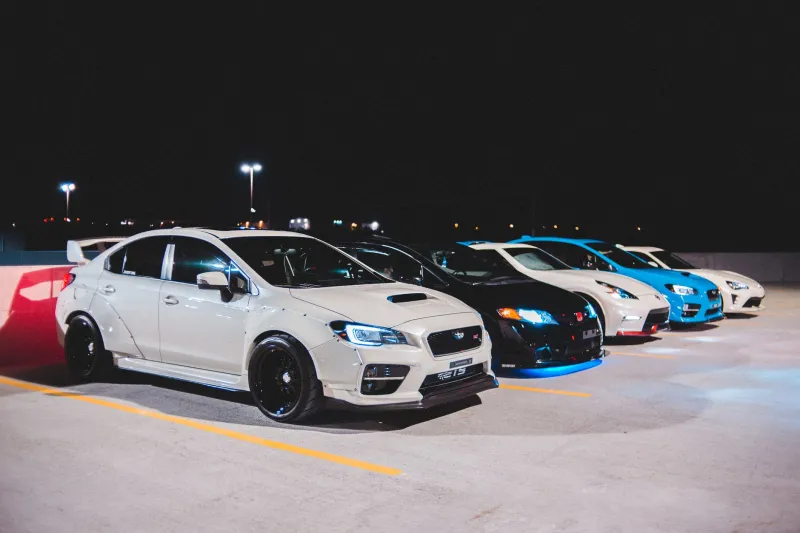
Here's a truth nobody talks about loud enough in the build community: the first time most people really see your car isn't under the fluorescent buzz of a show tent or the midday sun at a Sunday meet. It's at night. Rolling into a cruise, pulling into a parking structure, or sitting at a red light with a dozen phones already pointed at you—or not. Lighting decides that outcome before your wheels even stop spinning.
And yet, lighting is treated like an afterthought. Builders will spend six months agonizing over a wheel fitment decision and then slap some cheap RGB strips under the rocker panels and call it a vision. That's not a build strategy. That's a grocery run with extra steps.
Let's talk about what lighting actually does for a build, what it says about you, and how to use it with intention.
The Psychology Behind the Glow
Human eyes are hardwired to track light in darkness. It's primal. So when a car rolls through a night meet with lighting that's been thought through—color, placement, intensity, diffusion—it triggers something in people before they've even processed what they're looking at. That's not marketing speak. That's just how vision works.
The problem is that most builders treat lighting like decoration. Real builders treat it like architecture. The same way a well-designed building uses light to guide your eye, direct your attention, and create mood, your build should be doing that work in a parking lot at 10 PM.
Color temperature matters. Placement matters. Whether your light source is visible or hidden matters. These aren't small details—they're the entire experience.
Underglow: The OG That Still Gets Disrespected
Underglow has a reputation problem, and it's mostly deserved—but only because people do it wrong. Cheap LED strips slapped up with zip ties, running a color that clashes with the paint, pulsing to a beat nobody asked for. That's the version everyone makes fun of.
Done right, underglow is a legitimate tool. The key is diffusion and color discipline. If you can see the individual LED diodes from 10 feet away, you've failed. The light should wash across the ground in an even, controlled glow that lifts the car visually off the pavement. It should feel like the car is floating, not like it's wearing a neon sign.
Color choice should complement your build's palette, not compete with it. A blacked-out car with cold white or deep blue underglow? That's a statement. A candy red build with purple underglow? That's a headache. Keep it tight.
Also—and we'll get into this more—check your local laws before you commit. Several states have specific restrictions on underglow colors while the vehicle is in motion. Red and blue are almost universally off-limits. White can be restricted to the front. Know before you glow.
Headlight Mods: Where Function and Form Actually Collide
Headlight modifications are where the build community gets into genuinely interesting territory—and also where things go sideways fast if you're not paying attention.
Projector retrofits, custom halos, smoked housings, LED conversions—there's a massive range of options, and they don't all serve the same purpose. Some are about aesthetics. Some are about actual performance lighting. The smart builder understands which category their mod falls into and makes peace with the tradeoffs.
Smoked headlights look aggressive and clean on the right build. They also reduce output, sometimes significantly. If your car is a dedicated show piece that trailers to events, that's a livable compromise. If you're driving home from a meet at midnight on a dark highway, you might want to reconsider.
Halo rings and custom DRL setups are where the real visual identity lives. Done well, they create a face for your car—a signature that's recognizable even at a distance. The builders who nail this treat the front end like a portrait. Every element is deliberate. The light shape, the color temperature, the way it interacts with the headlight housing design. It's not decoration. It's identity.
Interior Ambient Lighting: The Detail That Wins Over the Judges
Exterior lighting gets the crowd. Interior lighting wins the show.
When a judge or a photographer leans into your car window and sees a thoughtfully lit cabin—footwell lighting that matches your exterior theme, dash accent strips that don't look like they came from a dollar store, maybe some custom illuminated trim—that's when the build goes from impressive to memorable.
The amateur move is to flood the interior with the same color as the exterior and hope it looks cohesive. The pro move is to treat the interior as its own environment. Warmer tones tend to feel intentional and premium. Cooler tones can work if the build has a technical or motorsport aesthetic. Matching the color temperature of your gauge cluster and screen interfaces to your ambient lighting makes the whole cabin feel designed rather than decorated.
Dimmer control is non-negotiable. Static brightness at full blast is a rookie tell. Being able to dial the intensity based on the environment—show tent versus night cruise versus street driving—shows you actually thought about how the car gets used.
Exterior Accent Strips and Chassis Lighting: The Line Between Intentional and Chaotic
Accent lighting along body lines, wheel arches, grilles, and diffusers is one of the most powerful tools in the lighting toolkit—and one of the most abused.
The principle here is simple: light should direct the eye, not scatter it. If you put accent strips on every panel of the car with no visual logic connecting them, you don't get a cohesive look. You get a carnival ride.
The builds that do this well pick a flow. They think about where they want the viewer's eye to travel. Leading light lines from the front splitter through the rocker panel to a rear diffuser creates a visual narrative. It tells a story about the car's shape. Random strips on the hood, the door handles, and the trunk lid tell no story at all.
The Legal Gray Zone Nobody Wants to Talk About
Let's be real for a second. A lot of the most visually striking lighting setups exist in a legal space that ranges from "technically fine" to "please don't drive this to a checkpoint."
Understand the rules in your state. Most states follow federal guidelines that restrict certain light colors to emergency vehicles—red and blue being the main ones. Some states ban underglow entirely while the vehicle is moving. Others are relatively permissive as long as the lights aren't flashing or strobing.
The practical approach most serious builders take is to wire their more aggressive lighting setups to a separate switch. Show mode versus street mode. It's not a loophole—it's responsible ownership. You get the full visual impact at the show, and you're not giving a traffic cop a reason to pull you over on the way home.
Lighting Done Right Looks Effortless
That's the paradox. The best lighting setups at any show look like they weren't even trying—because every decision was so deliberate that nothing feels forced. The color is right. The placement is right. The intensity is right. It all just fits the build.
That doesn't happen by accident. It happens because someone spent time thinking about how light interacts with their specific paint, their specific body lines, their specific environment. It happens because they tested it in a dark garage before they ever drove it to a meet.
Your build doesn't stop existing when the sun goes down. Make sure it still says something when it does.