Parking Lots vs. For You Pages: The Battle for the Soul of Car Culture in 2024
Sunday Morning Used to Mean Something Different
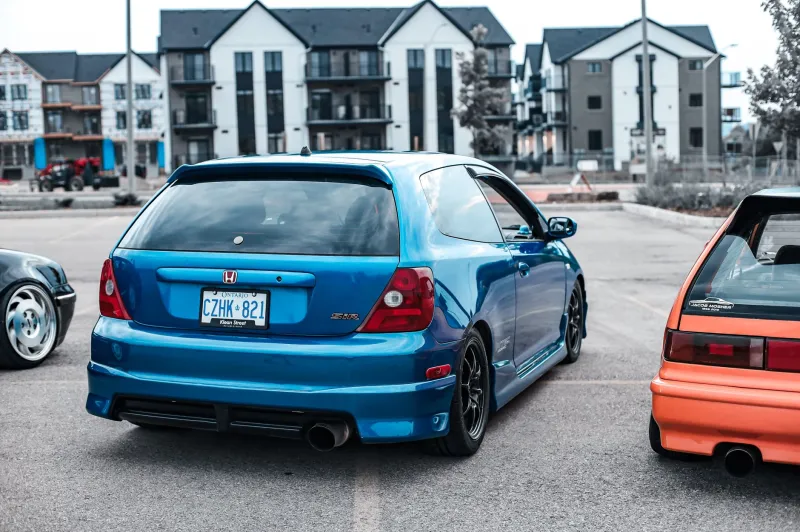
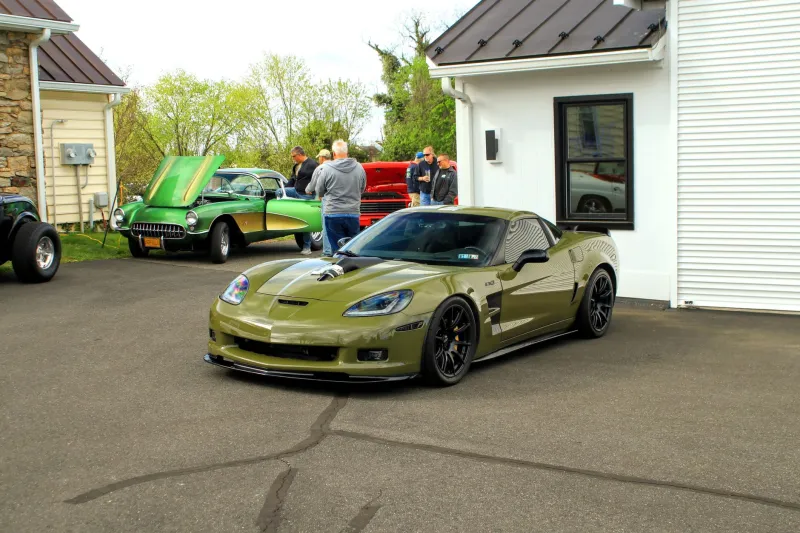
There was a time — not that long ago — when the only way to really show off your build was to physically show up somewhere. A parking lot outside a Dunkin' in New Jersey. A strip mall in Scottsdale at seven in the morning. A fairground in the Tennessee heat with a hundred other people who also decided their weekend was better spent talking carbs and camshafts than sleeping in.
That's Cars and Coffee. That's the swap meet. That's the local cruise night that's been running since before you had your license. And for decades, those gatherings were the heartbeat of American car culture — the places where reputations were built, friendships started, and the community actually breathed.
Now, in 2024, you can rack up two million views on a fifteen-second clip without ever leaving your driveway. So what does that mean for the parking lot crowd? We asked around.
The Case for the Feed
Ask any car content creator under thirty and they'll tell you the math is undeniable. Tyler, who runs a TikTok and YouTube channel out of Dallas focused on his built Subaru WRX, has 340,000 followers. He's been to maybe six car shows in the past year.
"I can post a reel of my car doing a pull on the highway and get more engagement in four hours than a car show gets attendance in a weekend," he said. "The reach isn't even close."
He's not wrong. The top automotive TikTok creators aren't just getting views — they're moving parts, influencing builds, and shaping what's cool in the community faster than any regional car show circuit ever could. A wheel design that blows up on social media in March is showing up on cars at shows by June. That's the speed of the internet, and it's genuinely changed how trends move through car culture.
There's also an accessibility argument. Not everyone lives near a thriving car meet scene. If you're in rural Montana or a small town in the South with no real local car community, TikTok and Instagram might be your only window into the culture — and your only stage to show off what you've built. That matters. The internet democratized the car show in a way that geography never allowed.
The Case for the Parking Lot
But talk to the other side — the early risers with lawn chairs and car covers, the guys who've been coming to the same meet for fifteen years — and you get a very different picture.
Dave, a retired machinist from outside Columbus, Ohio, has been attending Cars and Coffee events since the format was basically invented. He builds American muscle — currently a 1969 Camaro that he's spent the better part of a decade perfecting. He's not on TikTok. He doesn't plan to be.
"You can't smell a video," he told us, and honestly? That's a quote we're putting on a shirt. "You can't hear what a real exhaust sounds like through a phone speaker. You can't walk around a car and see how the light hits the paint. None of that translates."
He has a point that's hard to argue. The tactile, sensory experience of being around extraordinary cars — the heat coming off a freshly driven engine, the sound of a built V8 at idle, the conversation with the person who actually built the thing — that's something a fifteen-second clip will never fully capture.
And the community element is different too. The relationships that form at real car meets are fundamentally different from follower counts. People at shows help each other source parts, share shop recommendations, split costs on tools. That kind of mutual investment in the hobby doesn't really happen in a comment section.
Where Things Actually Stand
Here's what's interesting: when you step back from the either/or framing, the reality is more nuanced than the debate suggests.
The shows aren't dying. In fact, major Cars and Coffee events across the country — Irvine, Charlotte, Atlanta, Austin — are reporting strong attendance in 2024. The culture of showing up hasn't disappeared. But the purpose of showing up has shifted for some people. Increasingly, attendees are also content creators, and the show has become a filming location as much as a destination.
Walk any decent-sized car meet right now and you'll see people doing walking tours with their phones, drone operators hovering overhead, creators doing voiceover commentary on other people's builds. The physical event and the digital content machine have merged, and for a lot of enthusiasts, one feeds the other.
Creators use shows to generate content. Shows benefit from the exposure those creators bring. It's not a zero-sum game — at least not yet.
The Authenticity Question
Where things get genuinely complicated is around the question of authenticity. Car culture has always had a hierarchy of credibility — the people who actually wrench, who know the history, who can spot a fake modification from fifty feet. That hierarchy is being stress-tested by social media, where a car that looks great on camera can earn more clout than a car that actually performs.
We've all seen the builds that are clearly staged for content. Stickers covering rust. Lowered on springs so aggressive the car can barely leave a parking garage. Exhaust clips recorded separately and overdubbed onto the video. The community notices. And the community has opinions.
"There's a difference between a build and a prop," said Jess, a fabricator and car show regular from the Chicago area. "Social media is full of props. Shows are where you find out what's real."
That's a perspective that resonates with a lot of the old-school crowd. But it's also worth acknowledging that some TikTok builders are doing genuinely impressive work — and using the platform to document it in ways that are educational, inspiring, and accessible to people who'd never set foot at a car show.
So Where Does Car Culture Actually Live?
Honestly? Both places. And that's not a cop-out answer — it's the actual state of things in 2024.
The show scene is alive and still offers something that no algorithm can replicate: the real thing, in person, with people who care as much as you do. There's a reason people still wake up at six on a Sunday morning to drive an hour to a parking lot.
But social media has expanded what car culture is — its reach, its diversity, and its ability to connect builders who'd otherwise never find each other. That's genuinely valuable, even if the format has its own set of problems.
At Flash Your Rack, we believe the best builds deserve to be seen — whether that's by the guy standing next to your hood with a cup of coffee, or the kid in Iowa watching your reel at midnight dreaming about his first build. Show it off wherever you can. That's kind of the whole deal.