Five Grand, Full Send: How to Build a Legit Sleeper Without Emptying Your Wallet
The Myth of the Big-Budget Build
Let's be real for a second. Scroll through any car forum or Instagram feed and you'll see builds with price tags that'd make your mortgage lender sweat. Carbon fiber everything, custom widebody kits, turbos the size of a small appliance — it's impressive, no doubt. But it's also not reality for most of us grinding a nine-to-five and still trying to have a life outside the garage.
Here's the thing though: some of the most respected cars at any show aren't the ones with limitless budgets. They're the ones that tell a story — a story of smart choices, elbow grease, and knowing exactly where to spend and where to save. That's the sleeper mentality, and with five thousand dollars and a decent plan, you can absolutely pull it off.
We talked to three enthusiasts across the country who did exactly that. Their platforms? A Honda Civic, a Ford Mustang GT, and a Dodge Challenger. Their budget? Five grand each. Their results? Head-turning builds that hold their own at meets and actually drive better than stock.
Case Study 1: The Civic That Nobody Sees Coming
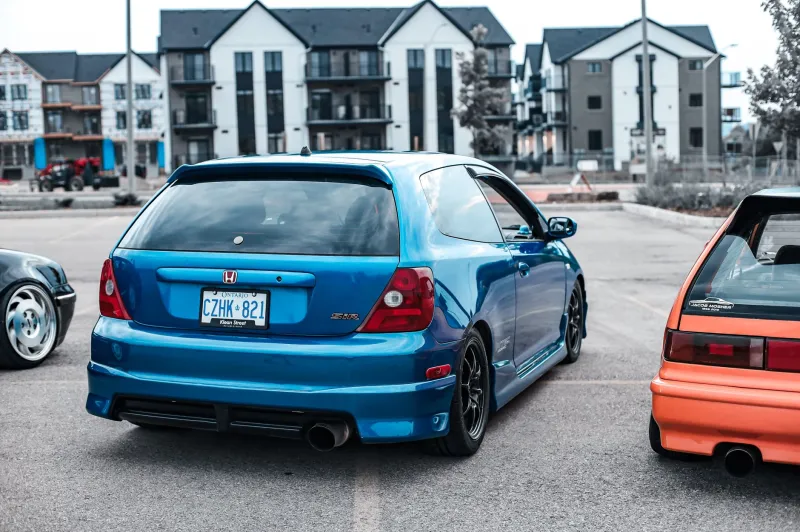
Marcus out of Phoenix built his 2015 Honda Civic Si into what he calls "the most dangerous-looking boring car in Arizona." On the outside, it's clean but subtle — a set of Enkei RPF1s in matte black, a modest lip kit from a reputable aftermarket brand, and a blacked-out grille. Nothing that screams "race car."
Under the hood and underneath the car is where the real story lives. Marcus dropped about $1,800 on a quality coilover setup from KW or equivalent, which transformed the handling from grocery-getter to genuinely planted. Another $900 went toward a stage 2 tune through a local shop with a proven track record on K-series motors. Throw in an intake, a cat-back exhaust, and some supporting mods, and the car pulls noticeably harder than anything the badge suggests.
"People rev at me thinking it's gonna be a joke," Marcus told us with a grin. "Then they hear it spool and suddenly they're not laughing."
Total spend: right around $4,700. The breakdown looked roughly like this:
- Coilovers: $1,800
- Wheels and tires: $1,200
- ECU tune + intake + exhaust: $1,200
- Exterior cosmetics (lip, grille, tint): $500
Case Study 2: The Mustang That Punches Up
Sarah from Nashville had a 2018 Mustang GT that she loved but felt was "just another Mustang in a sea of Mustangs." Her goal wasn't to build the fastest car on the block — it was to build something that felt uniquely hers while actually performing better.
She started with a Bama or Lund tune (around $400), which woke the 5.0 up noticeably on 93 octane. From there, she invested in a set of sticky summer tires — Michelin Pilot Sport 4S — which honestly transformed the car more than any bolt-on mod could. Good rubber is chronically underrated.
For visual impact, Sarah went with a set of Velgen wheels that gave the car an aggressive stance without needing spacers or a full suspension overhaul. She added a Ford Performance strut tower brace and a Steeda panhard bar to tighten up the rear end — both relatively affordable and genuinely noticeable in corners.
The final touch? A ceramic coating she applied herself over a weekend, using a quality enthusiast-grade kit. The paint pops like it just rolled out of a custom shop.
Sarah's $5K breakdown:
- Tune: $400
- Tires (Michelin PS4S): $1,100
- Wheels: $1,400
- Suspension bracing: $600
- Ceramic coat + detailing supplies: $400
- Miscellaneous (plugs, fluid service, badges): $100
Case Study 3: The Challenger That Eats Sports Cars
Then there's Big D from Atlanta and his 2016 Dodge Challenger R/T. The Challenger is already a presence — nobody's gonna call it subtle. So Big D went a different direction: make the performance match the attitude.
His biggest single investment was a supercharger kit — specifically a ProCharger D-1SC setup sourced through a group buy with his local Mopar club, which brought the cost down significantly. Paired with a tune from a shop that specializes in Hemi builds, the car went from a respectable 375 horsepower to something much more serious.
To keep the power from just spinning the tires into oblivion, he upgraded to a set of drag radials on the rear — Nitto NT05Rs — and stiffened up the suspension with Bilstein B6 shocks. The car doesn't autocross, but it hooks hard and goes straight when he wants it to.
Visually, he kept it factory-looking on purpose. That's the sleeper part. No body kit, no giant wing. Just a subtle set of black Hellcat-replica wheels and a blacked-out trunk badge.
Big D's build cost:
- ProCharger + tune (group buy pricing): $3,200
- Bilstein shocks: $600
- Drag radials + wheels: $900
- Misc. supporting mods: $300
Where to Spend and Where to Skip
Across all three builds, a few patterns show up that are worth paying attention to.
Spend on tires and suspension. Every single person we talked to said the same thing: chassis and rubber are where you feel the money. A mediocre engine mod on good suspension beats a killer engine mod on stock shocks every single time.
Don't overlook tuning. Whether it's an ECU reflash or a full dyno tune, getting your engine calibration dialed in is often the best bang-for-buck performance upgrade on the market. It makes everything else work better.
Buy quality wheels, not cheap ones. You can save money here by going with reputable mid-tier brands instead of top-shelf forged wheels, but don't cheap out on structural quality. A wheel failure at speed is a bad day.
Skip the flashy stuff that doesn't do anything. Fart-can exhausts, oversized wings on FWD cars, fake vents — the car community sees through it immediately. Spend that money on something real.
The Flash Your Rack Takeaway
Building something worth showing off doesn't require a trust fund or a sponsor. It requires a plan, some patience, and the willingness to prioritize the right upgrades over the shiny ones. The cars that get the most genuine respect at shows are the ones where you can tell every dollar was thought about.
Five grand is a real budget. It's also enough to build something legitimately impressive if you're smart about it. Start with your chassis, feed it good rubber, tune what's under the hood, and clean up the visuals with intention rather than noise.
Then drive it. Show it off. That's the whole point.